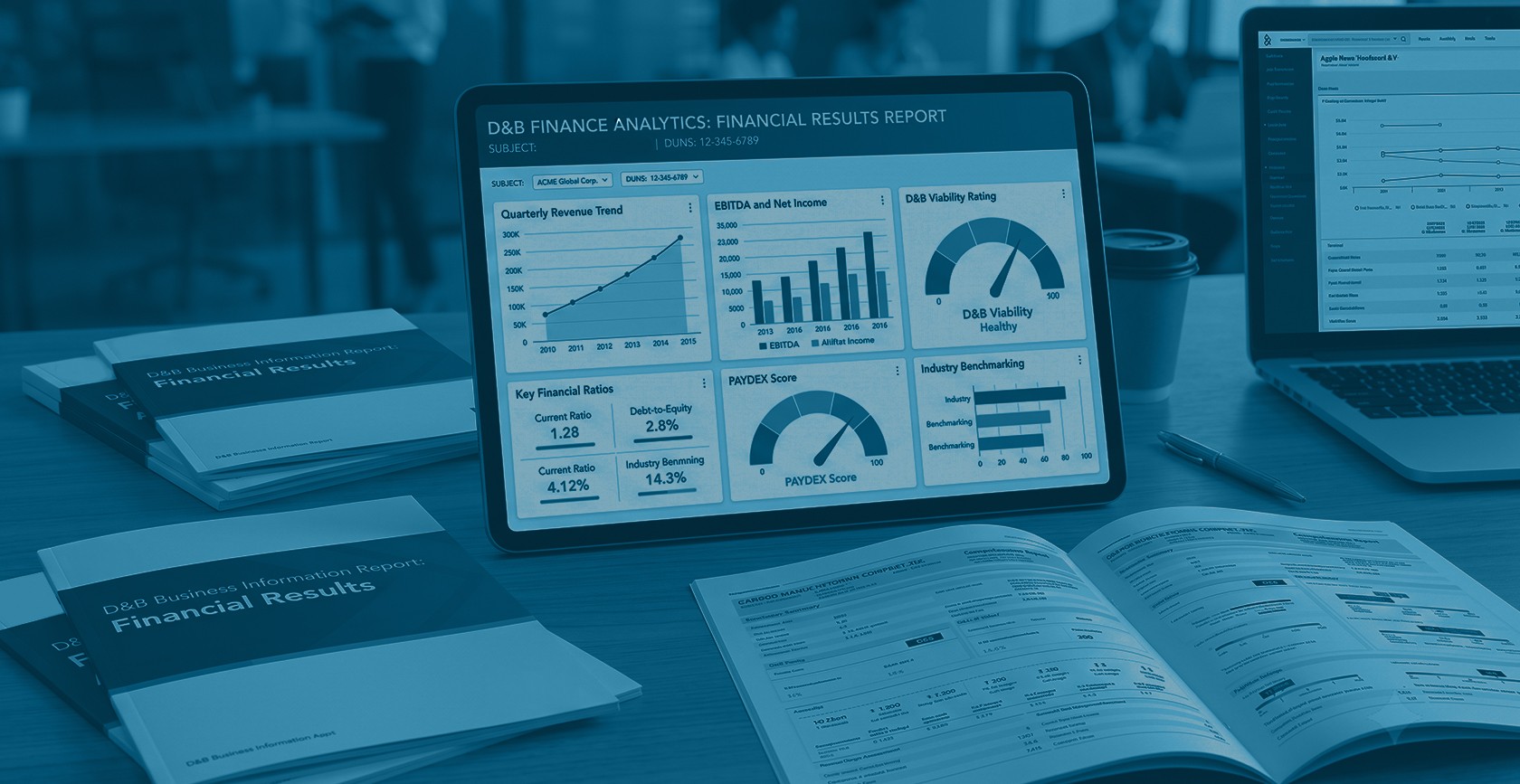
Every major business decision, whether it is setting next year's budget, applying for financing, or evaluating a potential partner, depends on an accurate view of financial performance. Without one, decisions are made on assumptions rather than evidence, which carries avoidable risk for business owners, investors, and lenders alike. A financial results report brings that evidence together in one place, turning raw financial data into something that can actually guide a decision.
This guide explains what a financial results report is, what it should include, and how businesses and other stakeholders use it to make smarter, more informed choices.
What Is a Financial Results Report?
A financial results report is a structured summary of a company's financial performance over a specific period, combining data from the income statement, balance sheet, and cash flow statement into one performance-focused document. It is built to answer a simple question: how well is this business actually performing?
Unlike a single financial statement, which shows one dimension of a company's finances, a financial results report brings multiple statements together with context, comparisons, and often key financial ratios, giving a fuller picture of financial health rather than an isolated snapshot.
Why Are Financial Results Reports Important for Businesses?
Financial results reports are important internally because they give business leaders a factual basis for budgeting, resource allocation, and strategic planning, rather than relying on assumptions about how the business is performing. Without this visibility, planning decisions are often reactive rather than deliberate.
Internal uses include:
- Budgeting and forecasting, using actual performance data rather than estimates from the previous cycle
- Resource allocation, directing spending toward areas showing strong returns and away from underperforming ones
- Strategic business planning, setting realistic growth targets based on demonstrated financial capacity
Businesses that review financial results regularly tend to catch problems, such as declining margins or rising costs, well before they become critical.
Why Are Financial Reports Important?
Beyond internal use, financial reports matter because external stakeholders, investors, lenders, suppliers, and business partners rely on them to assess a company's financial stability before committing to a relationship. This external dimension is often the more consequential one for a growing business.
External uses include:
- Investor decision-making, where financial reports form the basis for funding or investment decisions
- Lender due diligence, where reports support credit risk assessment ahead of loan approval
- Supplier and partner evaluation, where a company's financial stability influences whether a business relationship moves forward
- Business valuation, where historical financial performance directly informs how a company is valued
Financial transparency at this level builds credibility that a business cannot establish through reputation alone.
How Do Businesses Use Financial Results Reports?
Businesses use financial results reports across a range of practical scenarios, from internal strategic planning to external processes like fundraising, credit applications, and mergers or acquisitions. The report serves a different purpose depending on who is using it and why.
Common use cases include:
- Informing internal strategy, aligning departmental spending and growth plans with actual financial capacity
- Supporting financing applications, providing lenders with the data needed for credit risk assessment
- Mergers and acquisitions due diligence, giving acquirers a clear view of a target company's financial position
- Vendor and partner risk assessment, allowing businesses to evaluate the financial stability of suppliers or partners before entering agreements
In each case, the report functions as a shared reference point, giving everyone involved the same factual basis for decision-making.
What Information Is Included in a Financial Results Report?
A financial results report typically includes the income statement, balance sheet, and cash flow statement, along with a breakdown of revenue and expenses and a set of key financial ratios. These components together show profitability, financial position, and liquidity.
Core components include:
- Income statement, showing revenue, expenses, and net profit or loss over the reporting period
- Balance sheet, showing assets, liabilities, and equity at a specific point in time
- Cash flow statement, showing how cash moves through operating, investing, and financing activities
- Revenue and expense breakdown, detailing where income and costs originate
- Key financial ratios, such as profitability, liquidity, and solvency ratios, that translate raw figures into comparable measures
What Should a Financial Results Report Include?
Beyond the core financial components, a strong financial results report should include year-over-year comparisons, clear explanations for significant variances, and alignment with recognized financial reporting standards. These elements are what separate a genuinely useful report from a raw data dump.
A complete report should also include:
- Year-over-year or period-over-period comparisons, so performance trends are visible rather than isolated to a single period
- Variance analysis, explaining significant changes rather than leaving readers to guess why a number moved
- Alignment with recognized financial reporting standards, supporting consistency and comparability
- Audit verification, where applicable, adding credibility for external stakeholders reviewing the report
A report that includes the right data but skips context or comparison still leaves the reader to do the interpretation work the report should be doing.
How Can Financial Results Reports Improve Decision-Making?
Financial results reports improve decision-making by making it possible to spot trends, benchmark performance against past periods or competitors, and identify financial red flags before they escalate into serious problems. This is the direct link between reporting and better business outcomes.
Specific ways reports support better decisions:
- Trend analysis, identifying whether performance is improving, declining, or holding steady over time
- Benchmarking financial performance, comparing current results against historical performance or industry standards
- Identifying financial red flags early, such as shrinking margins, rising debt, or slowing cash flow, while there is still time to respond
Businesses that treat financial results reports as a decision-making tool, rather than a compliance formality, tend to act on warning signs earlier and with more confidence.
How Often Should Businesses Review Financial Results?
Most businesses benefit from a layered review cadence, monthly internal reviews for operational tracking, quarterly reporting for broader performance checks, and a comprehensive annual report for full-year analysis. The right frequency depends on the size of the business and how quickly conditions change.
- Monthly reviews help catch operational issues quickly, such as unexpected cost increases
- Quarterly financial reporting supports broader strategic check-ins without the overhead of monthly deep dives
- Annual financial reporting provides the comprehensive view needed for stakeholders, investors, and long-term planning
Businesses with access to real-time financial data can review performance more frequently without significantly increasing the manual effort required to prepare each report.
How Do Financial Reports Support Business Growth?
Financial reports support business growth by giving companies the evidence needed to make informed expansion decisions, strengthen their position when seeking investment or credit, and avoid the financial surprises that can derail growth plans. Growth built on unclear financial footing is inherently riskier than growth backed by demonstrated performance.
Specifically, strong financial reporting:
- Supports informed expansion decisions, backed by actual financial capacity rather than optimism
- Strengthens a company's position when approaching investors or lenders for growth capital
- Improves competitive financial positioning by demonstrating consistent, transparent performance
- Reduces financial risk by surfacing problems early, before they limit growth options
What a Strong Financial Results Report Should Include
- Income statement, balance sheet, and cash flow statement included
- Revenue and expense breakdown clearly presented
- Key financial ratios calculated and explained
- Year-over-year or period-over-period comparisons included
- Significant variances explained, not just reported
- Alignment with recognized financial reporting standards
- Audit verification included where relevant to stakeholders
Turning Financial Data Into Better Decisions
A financial results report is only as useful as the decisions it informs. Businesses that treat reporting as an ongoing discipline, rather than a once-a-year obligation, are better equipped to plan strategically, secure financing, and respond to problems before they escalate.
For businesses and lenders that need reliable, independently verified financial and credit data to support these decisions, D&B Egypt provides business information and financial risk solutions that go beyond internal reporting, helping you assess counterparties, evaluate credit risk, and make informed decisions with confidence.
To strengthen your financial decision-making with trusted business intelligence, connect with D&B Egypt to explore financial risk and business information solutions tailored to your needs.
FAQs
Q: What is the difference between a financial results report and a financial statement?
A: A financial statement, such as an income statement or balance sheet, shows one specific dimension of a company's finances. A financial results report combines multiple statements with comparisons and ratios to give a fuller picture of overall performance.
Q: How can a small business start producing financial results reports?
A: Small businesses can start with basic income statements and cash flow tracking, then expand to include balance sheet data and simple ratio analysis as the business grows and reporting needs become more sophisticated.
Q: What happens if a financial results report shows a loss?
A: A reported loss is not automatically a crisis, it depends on context such as planned investment, seasonal patterns, or one-time expenses. What matters most is whether the report explains the cause and whether the trend is improving or worsening over time.
Q: How do lenders and credit agencies evaluate a company's financial results report?
A: Lenders and credit agencies typically focus on liquidity, solvency, and profitability ratios, along with consistency across reporting periods, to assess repayment capacity and overall financial risk before extending credit.
Q: How is a financial results report different from a business credit report?
A: A financial results report reflects a company's own internal financial performance, while a business credit report, often compiled by a third party, assesses a company's creditworthiness using financial data alongside payment history and other risk indicators.
Q: What tools or software help businesses generate financial results reports?
A: Accounting software and enterprise resource planning platforms can automate much of the data collection and calculation involved, though businesses often still rely on finance teams or external advisors to add context and variance explanations.
Q: How do businesses ensure the accuracy of their financial results reports?
A: Accuracy typically comes from consistent accounting practices, regular reconciliation of financial data, and, for larger or externally reviewed reports, independent audit verification.
Q: Can financial results reports be used to negotiate financing or investment terms?
A: Yes, a strong, transparent financial results report can support more favorable financing or investment terms, since it gives lenders and investors greater confidence in the accuracy and stability of the business's financial position.